
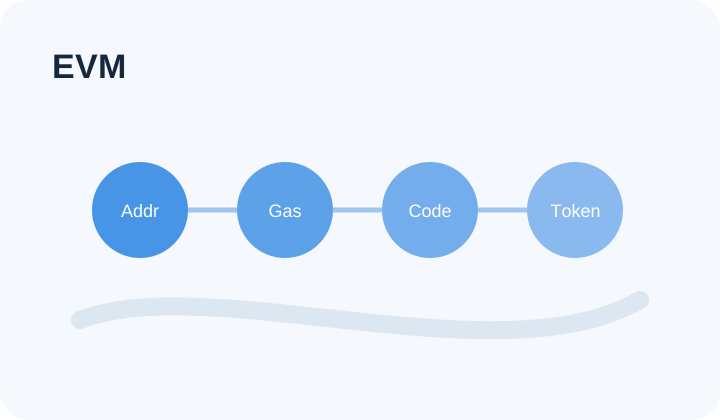
What the EVM execution environment provides
What the EVM execution environment provides is a distinct part of understanding EVM Networks.
Within EVM Networks, what the evm execution environment provides should not be treated as an isolated concept. Real actions often involve an account, a selected network, on-chain state and an explicit user decision. A reliable approach is to define the task first and then review every input that can change the outcome. A familiar interface or a sense of urgency is not a reason to approve a request you cannot explain.
When reviewing what the evm execution environment provides, prefer information that can be independently checked. Network names, addresses, contract identifiers, transaction hashes and block-explorer records are usually more useful than screenshots or messages from third parties. A wallet can surface these details, but users still need to distinguish between being connected, signing a message, granting an approval and seeing a confirmed transaction.
A practical routine is to divide the process into before, during and after. Before the action, verify the source and environment. During confirmation, read the network, address, amount, permissions or contract target. Afterward, verify the result on-chain. This makes it easier to diagnose pending transactions, display issues or DApp state mismatches without guessing.
Similar addresses do not make assets portable by default
Similar addresses do not make assets portable by default is a distinct part of understanding EVM Networks.
When reviewing similar addresses do not make assets portable by default, prefer information that can be independently checked. Network names, addresses, contract identifiers, transaction hashes and block-explorer records are usually more useful than screenshots or messages from third parties. A wallet can surface these details, but users still need to distinguish between being connected, signing a message, granting an approval and seeing a confirmed transaction.
A practical routine is to divide the process into before, during and after. Before the action, verify the source and environment. During confirmation, read the network, address, amount, permissions or contract target. Afterward, verify the result on-chain. This makes it easier to diagnose pending transactions, display issues or DApp state mismatches without guessing.
Within EVM Networks, similar addresses do not make assets portable by default should not be treated as an isolated concept. Real actions often involve an account, a selected network, on-chain state and an explicit user decision. A reliable approach is to define the task first and then review every input that can change the outcome. A familiar interface or a sense of urgency is not a reason to approve a request you cannot explain.
How gas, contracts and token approvals connect
How gas, contracts and token approvals connect is a distinct part of understanding EVM Networks.
A practical routine is to divide the process into before, during and after. Before the action, verify the source and environment. During confirmation, read the network, address, amount, permissions or contract target. Afterward, verify the result on-chain. This makes it easier to diagnose pending transactions, display issues or DApp state mismatches without guessing.
Within EVM Networks, how gas, contracts and token approvals connect should not be treated as an isolated concept. Real actions often involve an account, a selected network, on-chain state and an explicit user decision. A reliable approach is to define the task first and then review every input that can change the outcome. A familiar interface or a sense of urgency is not a reason to approve a request you cannot explain.
When reviewing how gas, contracts and token approvals connect, prefer information that can be independently checked. Network names, addresses, contract identifiers, transaction hashes and block-explorer records are usually more useful than screenshots or messages from third parties. A wallet can surface these details, but users still need to distinguish between being connected, signing a message, granting an approval and seeing a confirmed transaction.
What to verify when adding network parameters
What to verify when adding network parameters is a distinct part of understanding EVM Networks.
Within EVM Networks, what to verify when adding network parameters should not be treated as an isolated concept. Real actions often involve an account, a selected network, on-chain state and an explicit user decision. A reliable approach is to define the task first and then review every input that can change the outcome. A familiar interface or a sense of urgency is not a reason to approve a request you cannot explain.
When reviewing what to verify when adding network parameters, prefer information that can be independently checked. Network names, addresses, contract identifiers, transaction hashes and block-explorer records are usually more useful than screenshots or messages from third parties. A wallet can surface these details, but users still need to distinguish between being connected, signing a message, granting an approval and seeing a confirmed transaction.
A practical routine is to divide the process into before, during and after. Before the action, verify the source and environment. During confirmation, read the network, address, amount, permissions or contract target. Afterward, verify the result on-chain. This makes it easier to diagnose pending transactions, display issues or DApp state mismatches without guessing.